How the Château de Chambord Double Helix Staircase Works
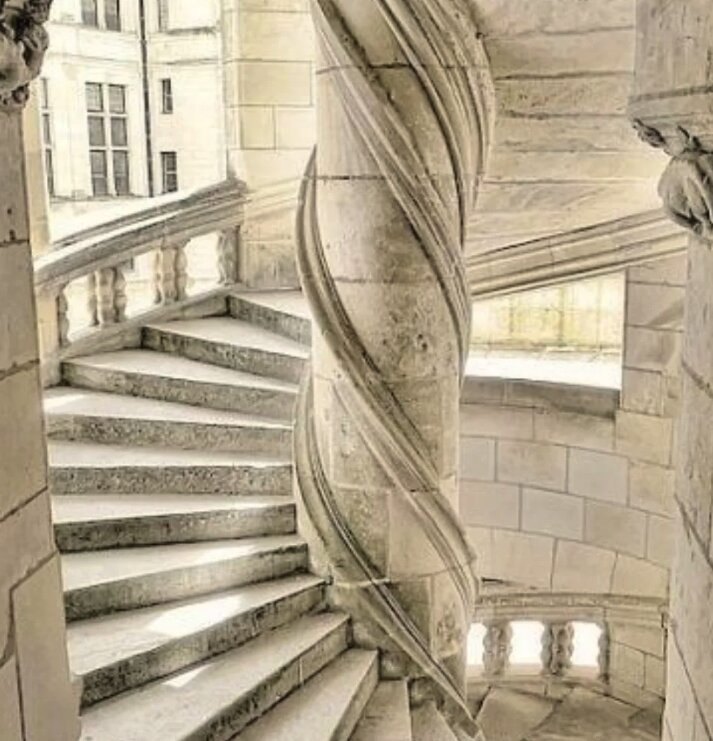
The short answer. Chambord’s staircase is two helical ramps twisting one above the other around a hollow, partly open core. Two people on the two ramps can see each other through the openings and never meet. It stands at the exact centre of the keep, where four great rooms meet in a cross, and rises from the first floor to the roof terraces under the lantern tower.
It is the reason most people come, and it is invisible from outside. Here is how it works, why it is where it is, and how to see it properly. If you would rather have a guide explain it on the spot, the tickets and guided visits at Chambord include one.
Two routes, one tower. The two ramps share a single axis and never touch, so the staircase works as two separate stairways wound inside each other. That is why two people can climb at the same time, watch each other the whole way, and still never cross.
Where the staircase stands
Inside the keep, four rooms, each 9 metres wide and 18 metres long, meet at the centre in the shape of a Greek cross. The staircase fills the point where they meet. Every floor of the keep is organised around it, so on each level you step out of the stair into the middle of the building.
From outside you cannot see it at all. Its only visible sign is the lantern tower rising above the roof, directly over it.
Two ramps, one core
A normal spiral staircase has one ramp winding round a solid post. Chambord’s has two ramps, one above the other, winding round the same axis, and the post is hollow. The core is partly open, so light falls down through it and you can see across it.
Because the two ramps never touch, they form two separate routes up the same tower. You can go up one while someone else comes down the other, and neither of you ever blocks the other.
The game visitors have played since the 16th century
The estate says the staircase has fascinated visitors since the 16th century for two reasons: the engineering, and the theatre. Two people who start on different ramps can see each other through the openings the whole way up, and never meet.
Try it with whoever you came with. One of you takes each entrance at the bottom. Wave through the gaps as you climb. You will both arrive at the top at the same time, and you will not have passed each other once.
Why put it in the middle?
Placing the staircase at the heart of a building was new. The estate notes that it was positioned in a previously unprecedented way, as the axis of the whole palace. The plan and the decoration are organised around it.
The cross plan it sits in carries meaning too. Cross plans were usually for churches, and using one for a royal house points to the sacred status of the French king. The staircase is the centre of that cross.
Did Leonardo da Vinci invent it?
Nobody can say for certain. What can be said is that sketches in Leonardo da Vinci’s notebooks show a double helix staircase, and that François I had brought Leonardo to France in 1516, three years before work began. The estate lists the staircase among the “telltale indications” of his influence, alongside the centre-plan keep. The architect of Chambord remains unknown, and the post on who built it goes into why.
The staircase in figures
| Question | Answer |
|---|---|
| Where is it? | The centre of the keep, where the four cross-shaped rooms meet |
| What shape? | Two helical ramps, one above the other, round a hollow core |
| Which floors? | The main floors of the keep, up to the roof terraces |
| What crowns it? | The lantern tower, the tallest tower of the château |
| Can you see it from outside? | No; only the lantern above it |
| Is it on the visit? | Yes, it is the route between the floors |
| Is there a lift? | No; the upper floors are reached by stairs only |
From the first floor to the lantern
Climb to the top and you come out on the roof terraces, among the chimneys, stair turrets and dormers that make Chambord’s skyline. The lantern tower rises from the middle, above the staircase you have just climbed. From up there you can see the pattern of the French formal gardens and the long avenues running into the forest.
The terraces are also where the permanent display on 1939 to 1945 begins, when the château hid the Louvre’s paintings. What to see puts the whole route in order.
How to see it properly
- Arrive at 9:00. The first hour is the quietest on the stair.
- Look up the core from the bottom before you climb; the light falls through it.
- Take both ramps with a companion, then swap on the way down.
- Stop on each landing, because each opens into the middle of a different floor.
- Rent the HistoPad for €6.50 if you want the 3D reconstructions of the rooms around it.
Wear shoes with grip, because the stone steps are worn. If stairs are difficult, the HistoPad’s reduced-mobility version shows the upper floors from the ground; the details are on the accessibility page.
What the staircase leads to on each floor
Because every floor is built around it, the staircase doubles as the map of the visit. You step off it into the middle of a different level each time.
- Ground floor — the 20-minute film on the building, and the ramp that makes this level step-free.
- First floor — the apartments of later residents, from Louis XIV’s state apartment of 1680 to Maurice de Saxe’s refurnished rooms.
- Second floor — the carved vaults with the crowned F and the salamander, the children’s space, and from 26 September 2026 the Festins de Chambord exhibition.
- The terraces — the chimneys, the lantern tower and the way into the display on 1939 to 1945.
Give each landing a few minutes before you climb on. The HistoPad has a station on each floor that shows the rooms around the staircase as they were.
The other staircases
The double helix is not Chambord’s only stair. Open staircases in the corners of the court lead up to the two wings, and galleries on each floor connect them back to the keep. On the roof, the turrets that break the skyline each hold a small stair of their own. Only the one at the centre does the trick.
Hours and tickets for the château are on visiting Chambord.
Want someone to explain it on the stairs? The three below get you inside Chambord, one of them with a guide at your side; every fare is compared on Château de Chambord Tours.
Ways in to see the staircase for yourself
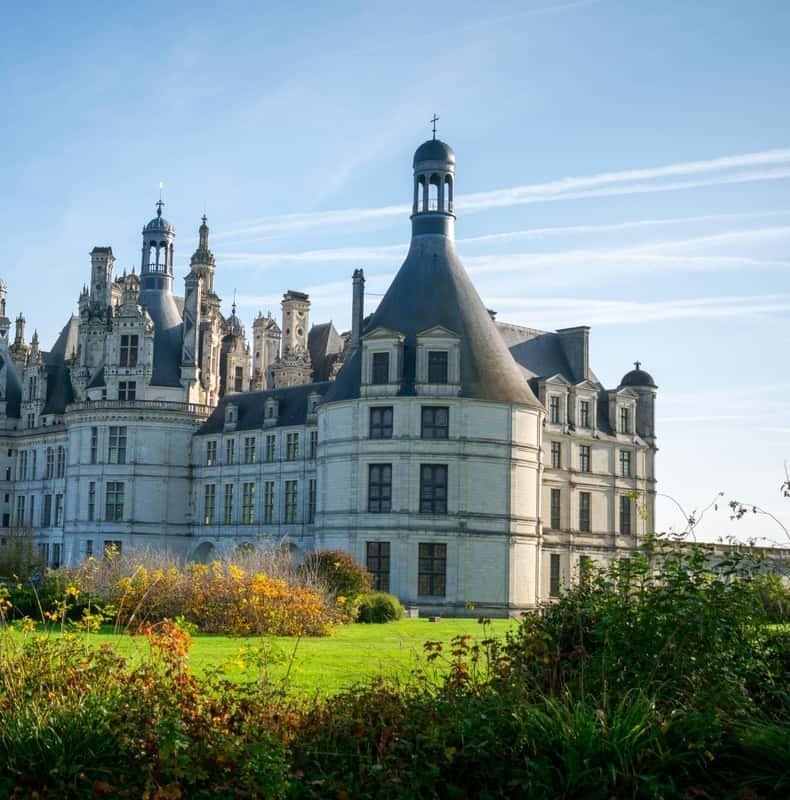
Guided visit of the Château de Chambord
Ninety minutes with a live guide inside Chambord, ten people at most, headsets.
From $52 per person
Check Availability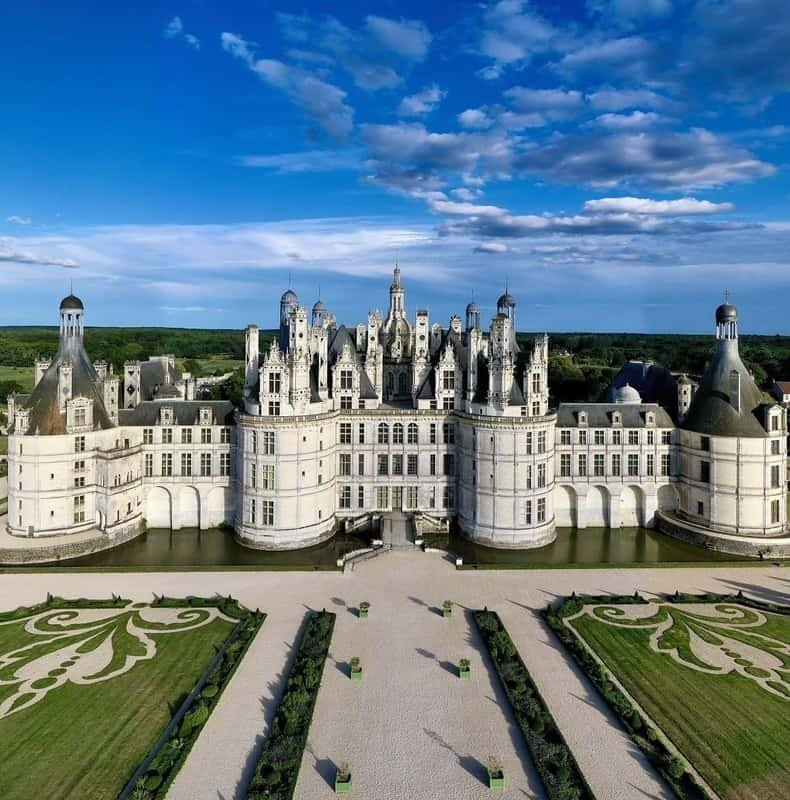
Chambord: Entry Ticket to the Castle
Admission to the château and gardens on your phone. A final sale, valid on your date.
From $24 per person
Check Availability
Loire Valley Castles Day Trip from Paris with Complementary Wine
Coach from Paris, both château tickets in the fare, and a wine tasting at Chenonceau.
From $129 per person
Check Availability